Yamaga Lantern Festival, Part 1 — Lanterns of Paper and Glue (English below)
熊本県山鹿市で、毎年8月15日・16日に「山鹿灯籠まつり」が行われます。会場は山鹿温泉の中心部にある大宮神社とその周辺。この2日間、温泉街は一年でいちばん華やぐ夜を迎えます。
伝承によると、深い霧に行く手を阻まれた景行天皇を、山鹿の里人たちが松明を掲げて迎えたのが始まりです。以後、天皇を祀った大宮神社に灯りを献げる習わしが続き、後に和紙の灯籠へと形を変えたと伝えられています。つまりこの祭りの灯りは、千年以上ともされ続けてきたことになります。
山鹿灯籠は、木や釘を使わず、和紙と糊だけで作られます。神社や城をかたどった立体的なものが多く、国の伝統的工芸品に指定されています。初めて間近で見ると、これが紙だとはなかなか信じられません。
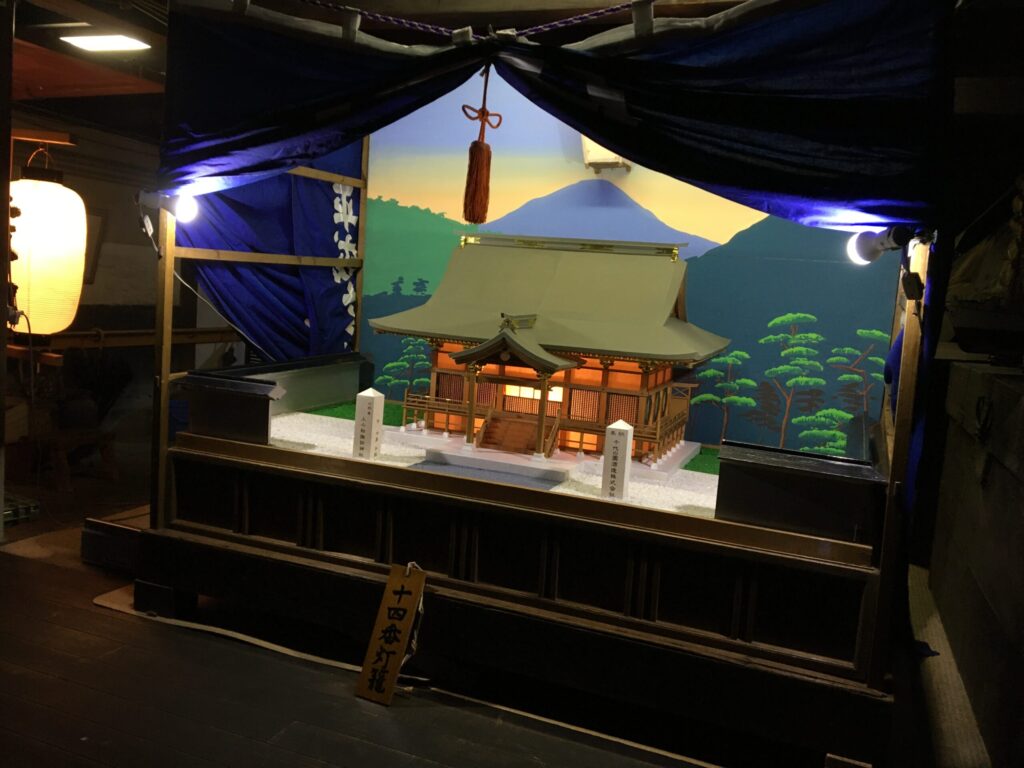
祭りの期間中、奉納灯籠が町の各所に展示されます。写真は神殿造りの灯籠です。背景画と照明を組み合わせた展示で、構造はすべて和紙。内側からの灯りが障子のように透けて、夜の街角でここだけがぽっと明るく見えます。展示を一つずつ巡り歩くのも、この祭りの楽しみ方の一つです。
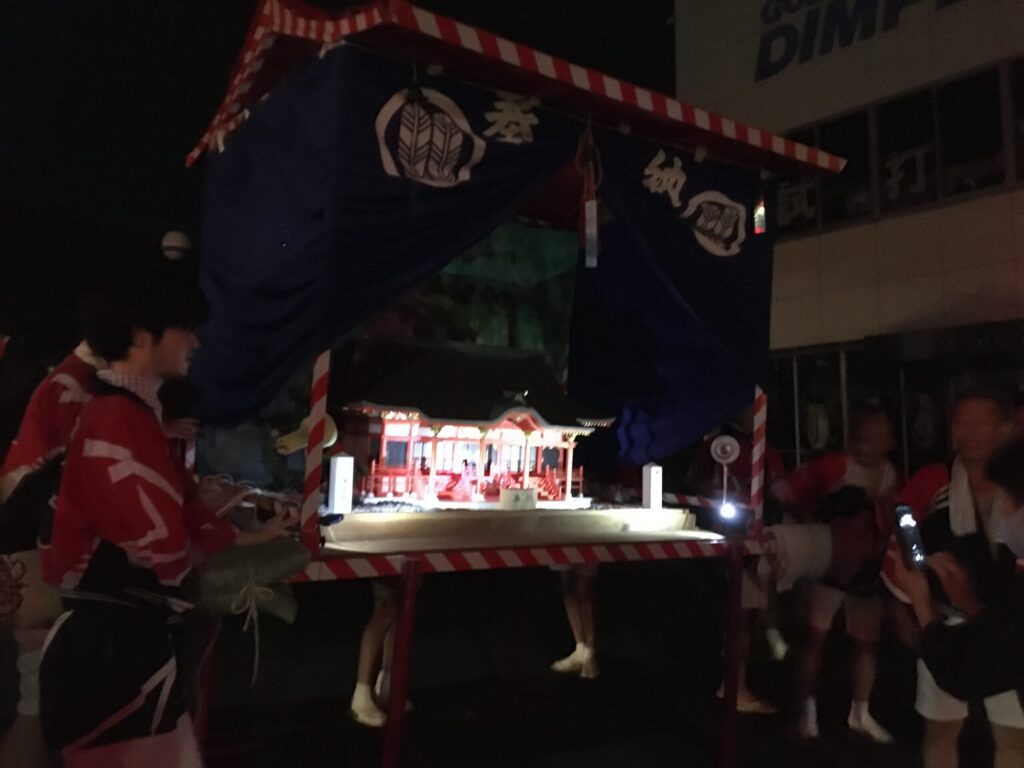
各町での展示を終えた灯籠は、16日の夜更け、男衆に担がれて大宮神社へ運ばれます。これを「上がり灯籠」と呼びます。「ハーイ、トウロウ」という掛け声が暗い通りの向こうから近づいてくると、沿道が少しざわめきます。灯りのともった灯籠が人の肩の上で揺れながら進んでいく——観光イベントというより神社への奉納の行事ですが、この光景に出会えるのは祭りの最終盤、この夜だけです。
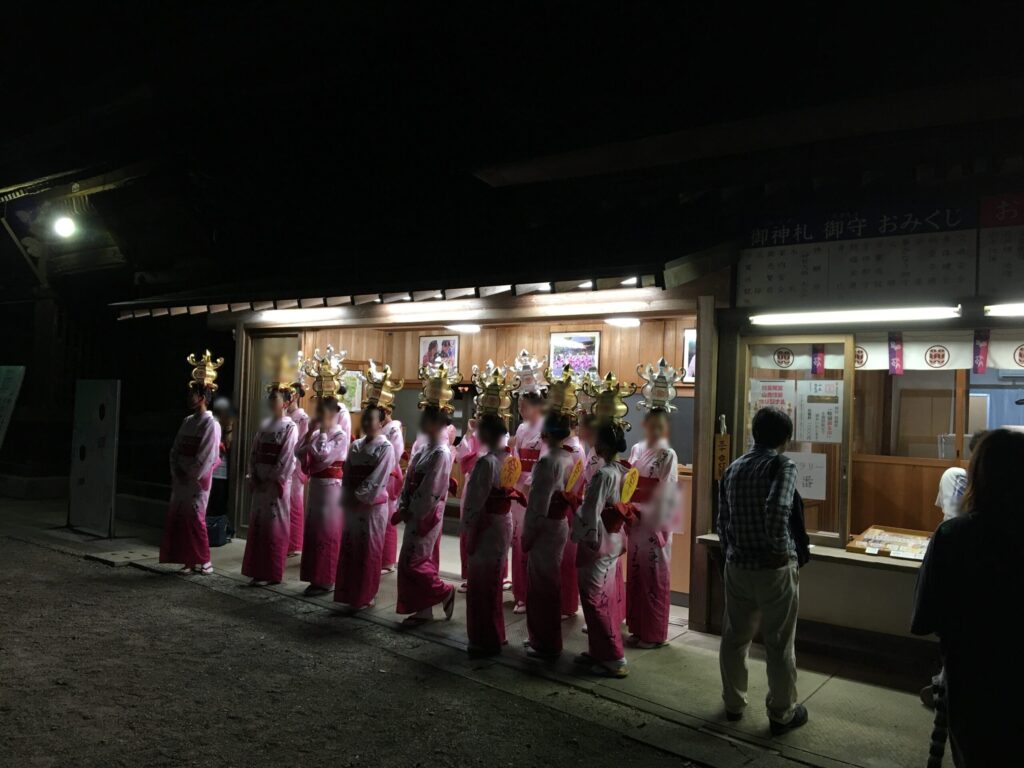
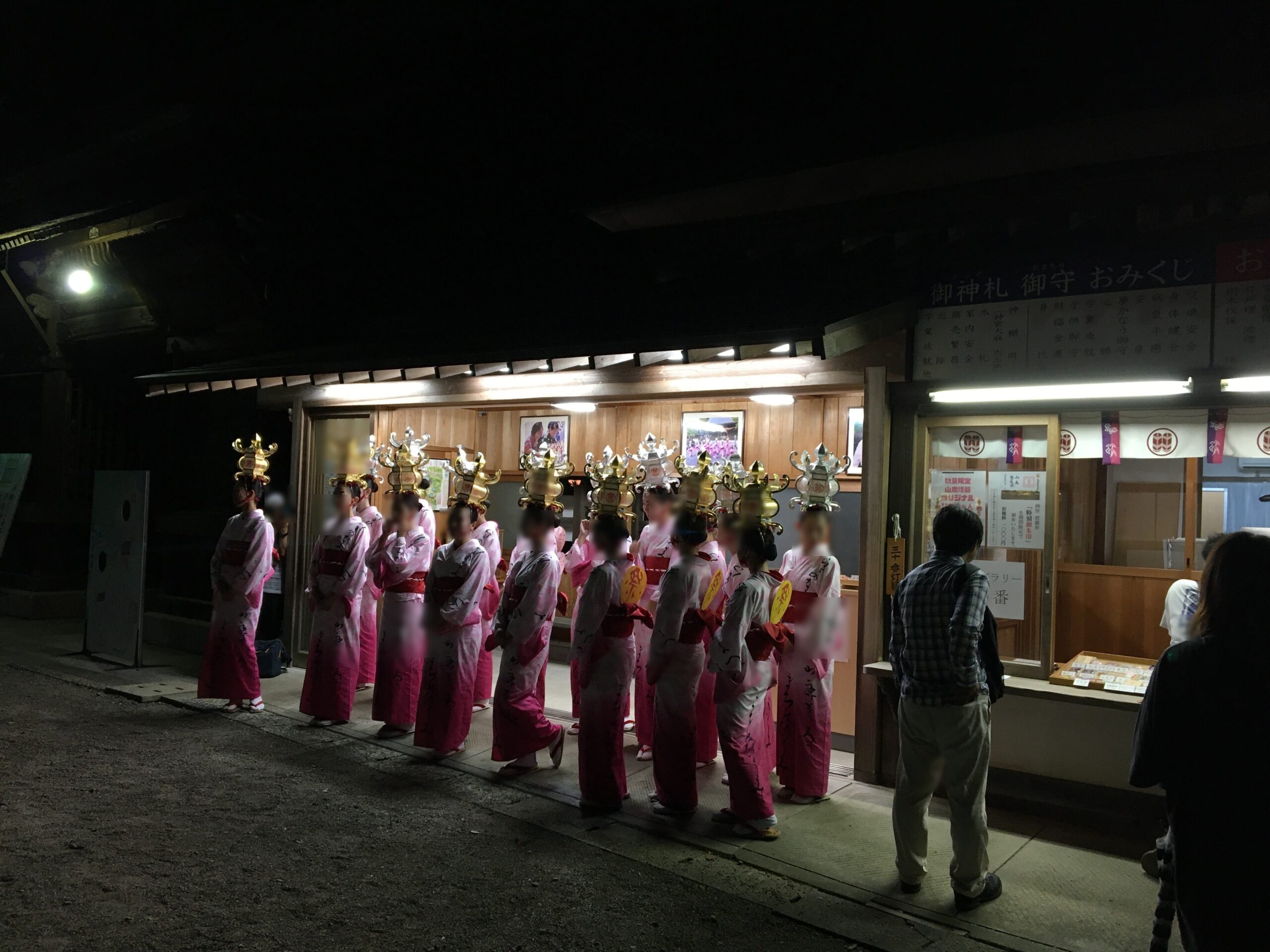
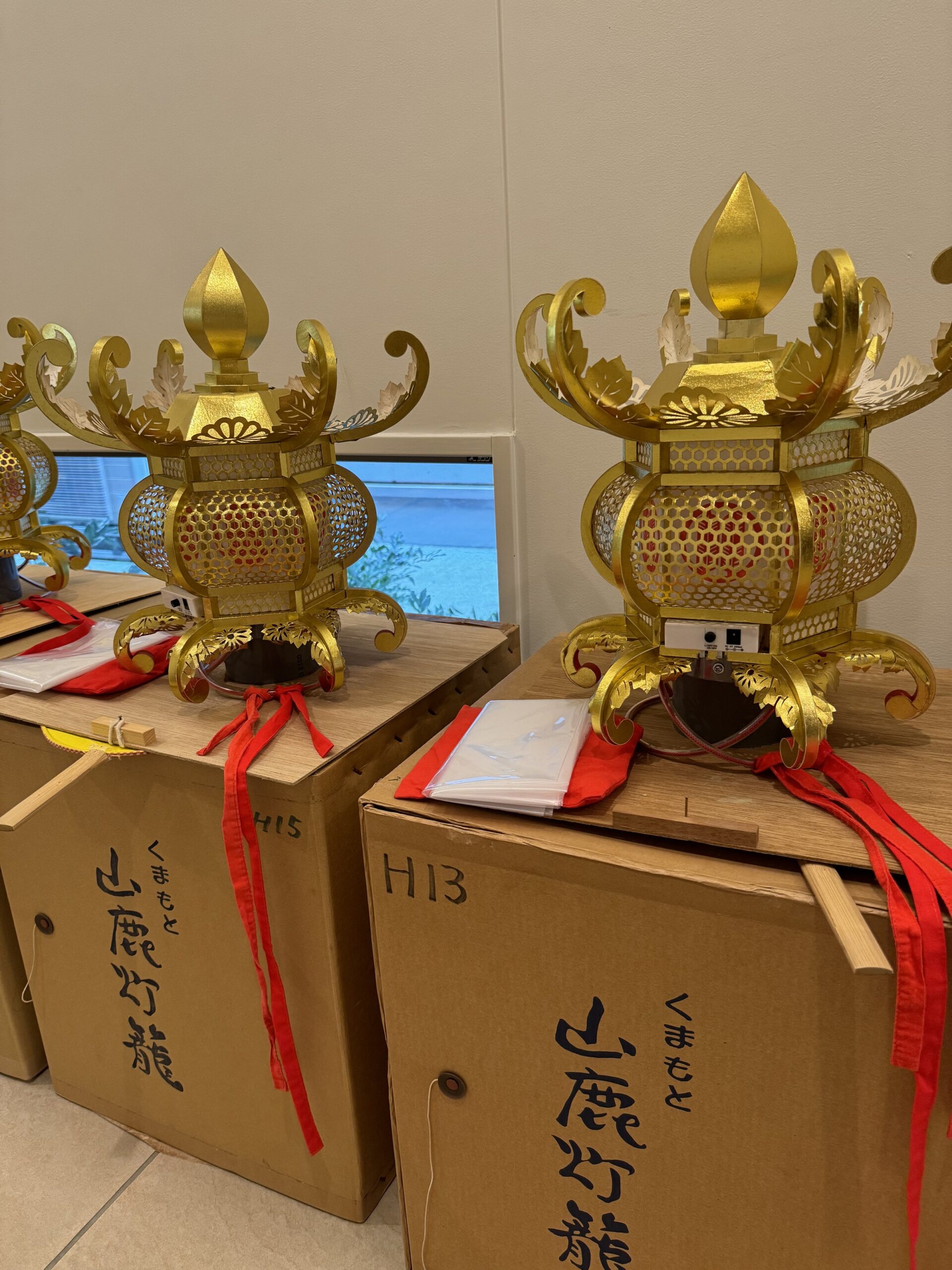
大宮神社では、頭に金灯籠(かなとうろう)を載せた浴衣姿の「灯籠娘」の方々が出番を待っていました。金灯籠も和紙と糊だけで作られています。境内には、出番前の静かな緊張感が漂っていました。
16日の夜には山鹿小学校グラウンドで「千人灯籠踊り」が行われます。金灯籠を頭に載せた数百人の女性が、民謡「よへほ節」に合わせて踊る、この祭りで最もよく知られた行事です。薄闇の中、無数の灯りがゆっくり渦を描く時間は、写真より実物のほうがずっといい——現地で見た正直な感想です。
訪れる際の情報
開催日:毎年8月15日・16日。千人灯籠踊りは16日の夜です。和紙の灯籠は雨に弱いため、雨天時は変更・中止になる場合があります。
アクセス:山鹿市には鉄道駅がないため、熊本市や福岡方面からはバスまたは車を利用します。祭り当日は周辺道路が混雑します。
周辺情報:山鹿の中心部には明治時代の芝居小屋「八千代座」、温泉施設「さくら湯」があります。灯籠の形をした最中(もなか)が土産物として売られています。
さて、ここまでは「見る側」の話。次回は、この祭りに灯籠娘として参加したときの体験を、、、!
English
Yamaga Lantern Festival, Part 1 — Lanterns of Paper and Glue
The Yamaga Toro Matsuri (Yamaga Lantern Festival) is held every year on August 15 and 16 in Yamaga, a hot-spring town in northern Kumamoto Prefecture. The festival centers on Omiya Shrine and the surrounding streets, and for these two nights the town is at its liveliest of the whole year.
Its origin is told in a legend: when Emperor Keiko’s procession was halted by deep fog, the villagers of Yamaga lit torches to guide him in. The custom of offering lights to Omiya Shrine, where the emperor is enshrined, continued from then on, and over time the torches were replaced by lanterns made of paper. In other words, the lights of this festival have been kept burning, in one form or another, for more than a thousand years.
Yamaga lanterns are made only of washi (Japanese paper) and glue — no wood, no nails. Many take the form of shrines or castles, and the craft is designated as a traditional craft of Japan. Seeing one up close for the first time, it is genuinely hard to believe it is paper.
During the festival, dedication lanterns are displayed at various places around town. The one in the photo is built in the style of a shrine hall, shown with a painted backdrop and lighting. The entire structure is paper. Light glows through it from within, like a paper screen, so that each display stands out softly against the dark street. Walking from one display to the next is one of the quiet pleasures of this festival.
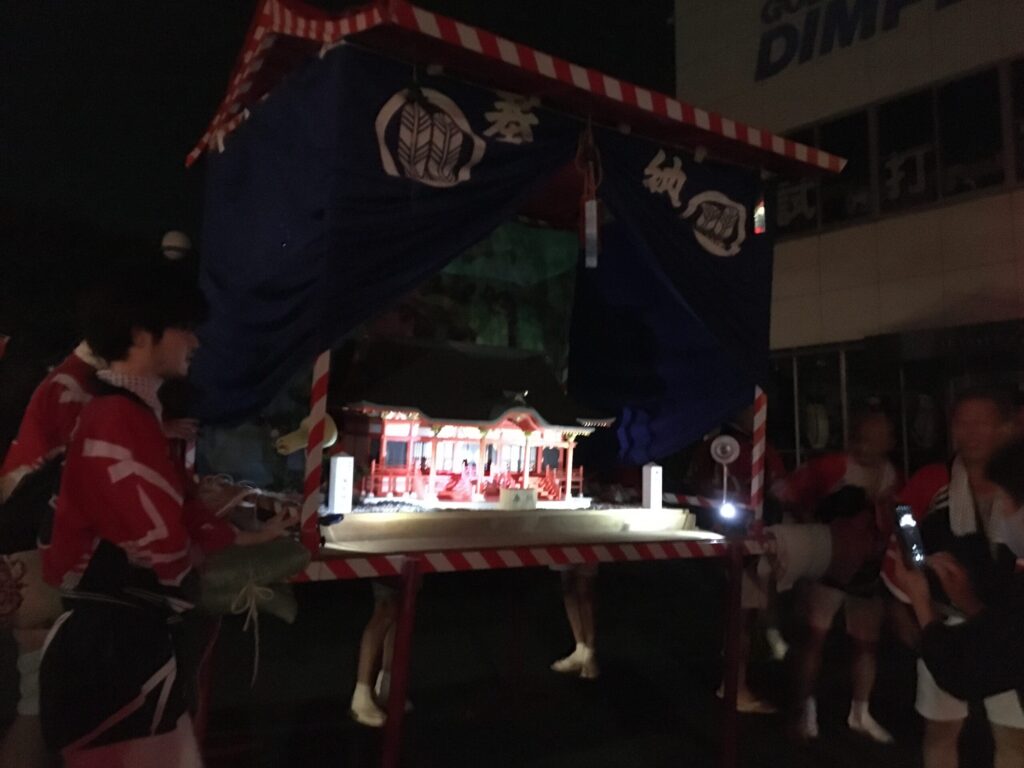
Late on the night of the 16th, the lanterns displayed in each neighborhood are carried by groups of local men to Omiya Shrine. This is called “Agari Toro” (the raising of the lanterns). When the chant of “Haai, toro!” approaches from down the dark street, a small stir runs through the crowd. The lit lanterns sway forward on the men’s shoulders. It is less a tourist event than a religious offering to the shrine — and you can only see it in the final hours of the festival, on this one night.
At Omiya Shrine, women called “Toro Musume” (lantern maidens) waited in yukata, each with a golden lantern on her head. These golden lanterns, too, are made only of paper and glue. A quiet, focused tension hung over the shrine grounds as they waited for their turn.
On the evening of the 16th, about a thousand women dance with these lanterns at the Sennin Toro Odori (Thousand-Lantern Dance), held on the grounds of Yamaga Elementary School, to the folk song “Yoheho-bushi.” It is the festival’s best-known event. A thousand small lights slowly circling in the half-dark — to be honest, no photograph quite does it justice. It is better seen in person.
Visitor Information
When: August 15–16 every year. The Thousand-Lantern Dance is on the evening of the 16th. Because the paper lanterns are vulnerable to rain, events may be changed or canceled in wet weather.
Getting there: Yamaga has no train station; access is by bus or car from Kumamoto City or the Fukuoka area. Roads are crowded on festival days.
Nearby: Yamaga’s town center is home to Yachiyoza, a Meiji-era theater, and Sakurayu, a public hot-spring bathhouse. Lantern-shaped monaka sweets are sold as souvenirs.
So much for watching from the sidelines. In the next post, I will write about taking part in this festival as a Toro Musume. How heavy is the golden lantern? What is the practice like? — Stay tuned.
コメント